_edited.png)


Updated: Feb 7
What Happened when I took a gym Reformer class: Part 1

Gym Reformer studios - and the trend of them- have been the primary culprit in the recent Pilates boom. Pretty gilded studios with pastel hued machines fill my instagram and clients flock to soft lighting and the promise of a toned bottom. But what is lost in all this buzz is the reality that what gym reformer studios offer is simply not Pilates because not all reformers are the same.
Pilates is a system of exercises engaging the whole body through the full range of motion of the muscles using specifically designed apparatus. IT is Integrated Exercise. The apparatus provides assistance to find engagement and to maintain connection in order to correct imbalance. The springs do not offer resistance to shorten muscles as in gym workouts. The spring load, gravitational load, dimensions, and components are all specific for the system. Change the apparatus, change the system, change the purpose, CHANGE THE RESULTS.
So can you really do Pilates on a gym reformer? Having tried contemporary gym reformers and attempted The Pilates System on them, here is a short list of where they fail in providing an authentic Pilates workout:
Footbar Angle and Size
The high angled foot bar is too far from the carriage meaning the body is no longer able to get flexion at the hip on footwork. Similarly, the distance places arms in tension for all armwork on the bar, increasing tension on the joints and limited connection through the whole body. For splits and advanced work the angle is too steep, turning the exercises into a dangerous balancing act. (If you need grippy socks to hold onto the bar, you are in trouble!)
Strap Angle
By elevating the straps with risers, the direction of force in most exercises is downwards, not up, creating front line tension, not backline connection, defeating the purpose of the horizontal placement of the body on the reformer. In legwork, this equates to more tension in the front of the legs and less connection to the back chain. In arm work this results in more tension in the shoulder joint and less connection to the back. In articulation work, the dumps pressure into the thoracic spine at the end range of the exercise.

Loops versus Handles
Yes, handles are more bulky, but they allow the full connection of the whole hand, leading to the arm connecting from the back to the springs. Loops cramp the hand, creating a grip in the front of the arm. (No, this is not grip strength, it’s the cramp that leads to elbow issues!)
Resistance of Springs
The springs in Pilates are designed to provide resistance in order to find connection, not to provide weighted resistance like weight lifting. More importantly, the setting is designed for the exercise, not based on the ability of the body. Having different resistance levels reduces that ability to find that connection, increases pushing against the spring rather than utilising the spring to maintain full ROM, and often encourages dangerous situations by creating false security from lessening the spring rather than doing exercises appropriate for the body. (We’ve all seen the videos of people falling off, snapping joints, etc. By the way, Injuries in pilates are a relatively new issue, thanks to the development of reformer classes.)
Resistance and size of Carriage
The drag of the wheels on the carriage is to allow the client to stay connected to the springs in both directions. This is crucial to Pilates and often lost on contemporary reformers. Also, the wider and shorter carriages make many of the advanced exercises out of alignment and difficult to execute.
Height of short box
This has been increased to use off the reformer and make exercises, especially those with the footstrap, too extreme for most bodies. This results in articulation exercises that compress the spine, rather than create space to move.
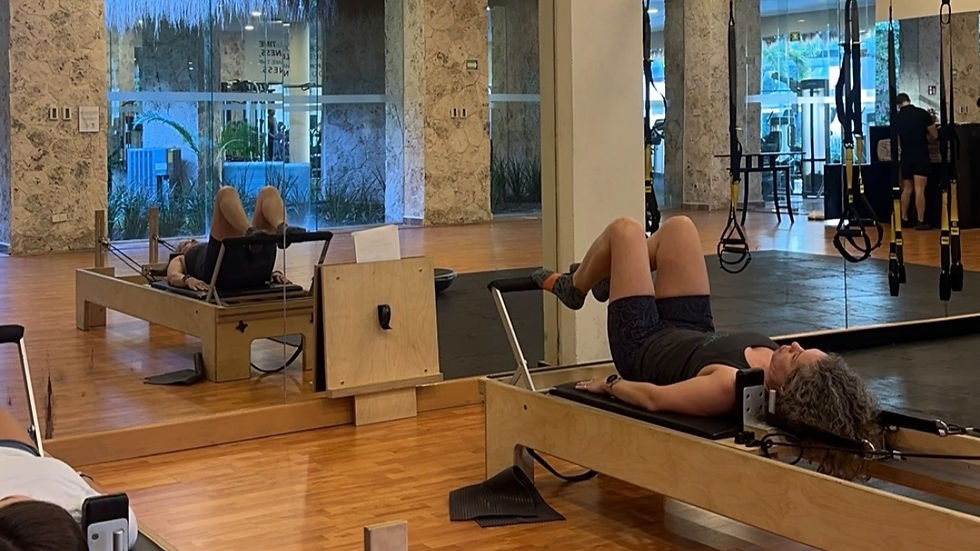
Height/Size/Quality of Reformer
Many contemporary reformers have changed the apparatus as they have changed the work. Many gym reformers are more cheaply made equipment that is just unsafe for commercial use. Modifying reformers to make them movable, to allow them to stack for convenience, all change the stability of the reformer as well as the ability to execute more advanced movements. (Again, the flimsy machines we see in all the reformer bloopers).
Locking Footbar
A complete reformer system contains over 40 exercises, which flow seamlessly between each other, complete with transitions, in order to move the body through a full range of moments with conscious consideration and minimal effort. Many of the adaptations to the contemporary reformers are designed to prevent injuries due to thoughtless or careless movement in a large class without teacher supervision. The result is apparatus that does not allow for continuous movement, the original meaning of ‘flow’. (No guys, Joe did not mean flow like your yoga class, he meant flow as in constantly moving efficiently.)
Bottom line: Contemporary gym reformers prevent connecting to the body, using the spring to deepen the connection to find length and strength, and safely accomplishing advanced movements or connection between exercises. Instead, they promote the same tightening and disconnection often found in gym classes. (Which may be why they are so popular in gyms these days?)
Are you getting results in your Pilates?
Are you leaving your sessions feeling light and connected?
If you aren’t doing Pilates on that reformer… What are you doing in those gym reformer classes?
Stay tuned for Part 2…


Comments